Introduction
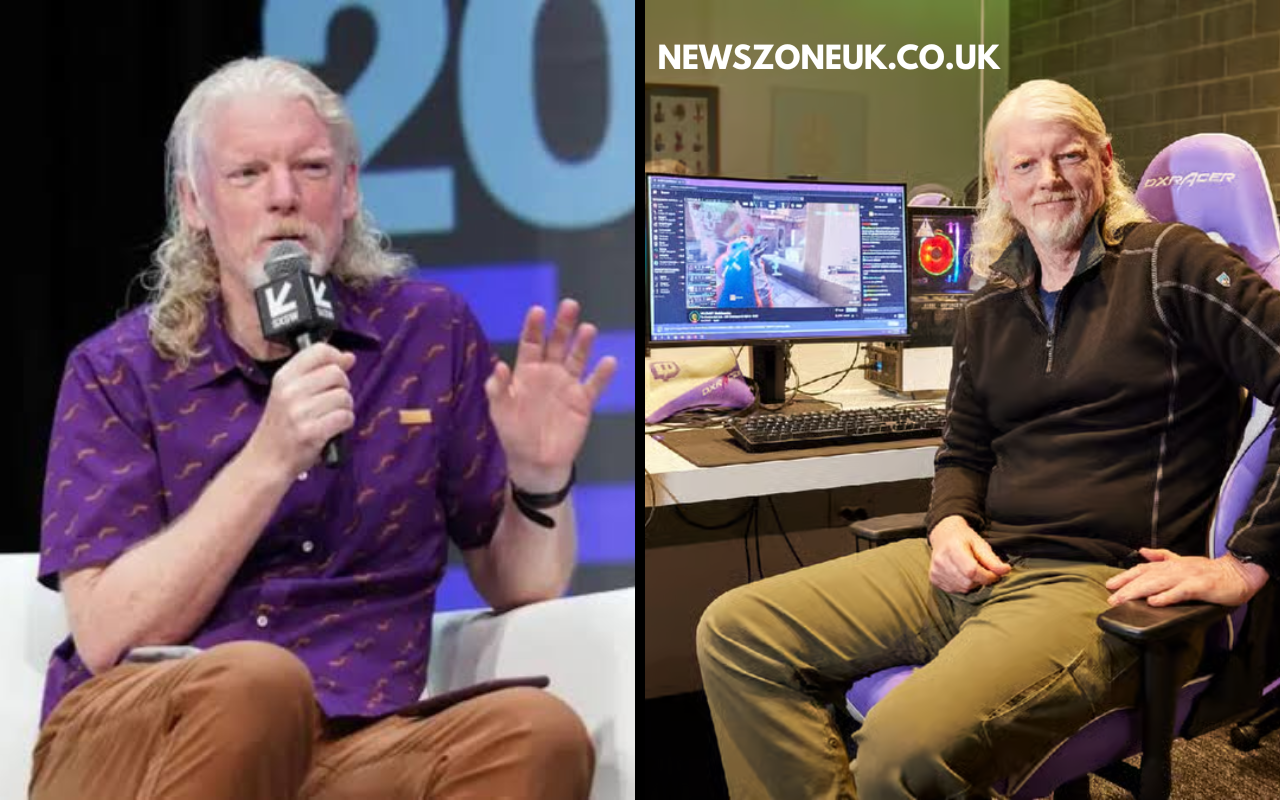
Most tech CEOs stay behind boardroom doors, issuing carefully worded statements and rarely interacting with the very communities their platforms serve. Dan Clancy is not that kind of leader. He’s the kind of CEO who streams accordion music to thousands of viewers on Twitch—the same platform he runs—while casually chatting about his day, taking song requests, and proving that leadership doesn’t have to mean detachment. His journey from NASA research labs to the helm of the world’s largest live-streaming platform is a story of intellectual curiosity, quiet competence, and an unusual blend of technical depth and creative soul.
As the Chief Executive Officer of Twitch, Clancy oversees a platform that hosts millions of streamers and attracts over 240 million monthly active users. He stepped into the role in March 2023, succeeding co-founder Emmett Shear. But his path to this position wasn’t a straight line through Silicon Valley startups. It wound through government space agencies, Google’s ambitious book-digitization project, and a hyperlocal social network before landing him at the heart of the creator economy.
His net worth—estimated between $15 million and $70 million depending on the source—reflects decades of steady equity accumulation rather than a single windfall event. But Clancy’s story is about much more than money. It’s about how a kid from New Orleans who double-majored in computer science and theatre ended up running one of the most influential digital platforms of our time—and why that unusual combination might just be his greatest asset.
Quick Facts
| Detail | Information |
|---|---|
| Full Name | Daniel Joseph Clancy |
| Date of Birth | January 11, 1964 |
| Age (2026) | 62 |
| Birthplace | New Orleans, Louisiana, USA |
| Nationality | American |
| Education | BA in Computer Science & Theatre, Duke University (1985); PhD in Artificial Intelligence, University of Texas at Austin |
| Profession | Technologist, Computer Scientist, Tech Executive |
| Current Role | CEO, Twitch (since March 2023) |
| Previous Roles | NASA (Ames Research Center), Google (Engineering Director, Google Book Search), YouTube, Nextdoor (VP of Product & Engineering), Twitch (President, EVP of Product) |
| Net Worth (2026) | Estimated $15 million – $25 million (sources vary up to $70 million) |
| Spouse | Sienna Clancy |
| Children | 2 |
| Twitch Handle | DJClancy |
| Known For | Leadership at Twitch, AI research at NASA, Google Book Search engineering |
| Residence | Outside Portland, Oregon |
Early Life and Education: A New Orleans Beginning
Dan Clancy was born on January 11, 1964, in New Orleans, Louisiana—a city far better known for jazz, Mardi Gras, and Creole cuisine than for producing tech executives. Growing up in the vibrant cultural melting pot of the Big Easy, Clancy was the second of seven children in a large, close-knit family. The city’s rich musical heritage and diverse community likely planted the seeds for his lifelong appreciation for creativity and performance—qualities that would later distinguish him from his more buttoned-up peers in the tech industry.
Clancy attended Jesuit High School in New Orleans, a rigorous college-preparatory institution that instilled in him a strong work ethic and intellectual discipline. After graduating, he set his sights on Duke University, where he pursued a Bachelor of Arts in Computer Science and Theatre—a combination that raised eyebrows then and still seems unconventional today.
At first glance, computer science and theatre might appear to be polar opposites. One is logical, systematic, and rooted in mathematics; the other is emotional, expressive, and rooted in human connection. But for Clancy, the two disciplines complemented each other perfectly. Computer science taught him how to build complex systems and solve intricate problems. Theatre taught him how to communicate, perform, and connect with audiences—skills that would prove invaluable when he later had to manage both streaming infrastructure and the temperamental world of content creators.
After graduating from Duke in 1985, Clancy continued his academic journey, earning a PhD in Artificial Intelligence from the University of Texas at Austin. At the time, AI was still largely an academic pursuit, not the world-altering industry it has become today. His doctoral research focused on the intersection of machine learning and human-computer interaction, laying the groundwork for a career that would span both cutting-edge research and large-scale product development.
While pursuing his graduate studies, Clancy gained valuable hands-on experience working at several prestigious institutions. He interned at Trilogy Corporation, the Xerox Webster Research Center, and NASA’s Jet Propulsion Laboratory. These early roles exposed him to some of the most advanced research environments in the country and helped shape his interdisciplinary approach to problem-solving.
NASA: From Researcher to Director
Clancy’s professional career began not in the bustling tech corridors of Silicon Valley but at NASA’s Ames Research Center in California. He joined the agency as a researcher focused on integrated health management, autonomy, and robotics—fields that required deep expertise in artificial intelligence and complex systems.
His work at NASA was nothing short of extraordinary. By 2000, he had risen to become Chief of the Computational Sciences Division at NASA Ames. Later, he served as Director of the Exploration Technologies Directorate, a division overseeing more than 700 people working on intelligent systems, nanotechnology, and entry systems for both robotic and human space exploration missions. In this capacity, he played a role in NASA’s planning for a crewed return to the Moon and eventual missions to Mars.
It is the kind of resume line that most executives would lead with. Clancy rarely mentions it.
His time at NASA wasn’t just about managing people and projects—it was about pushing the boundaries of what technology could achieve. He was responsible for computer science research investments in autonomy, robotics, and artificial intelligence. The work he did there contributed to some of the most ambitious space exploration initiatives of the era, and it gave him a front-row seat to the power of technology to solve humanity’s biggest challenges.
But after nearly a decade at NASA, Clancy felt the pull of the private sector. The internet boom was in full swing, and companies like Google were beginning to reshape the digital landscape. In 2005, he made the leap.
Google and the Book Search Era
When Clancy joined Google in 2005, he initially worked on International Search Quality before becoming the Engineering Lead for Google Book Search. This was no minor project. Google’s ambitious effort to digitize millions of books from libraries around the world touched off a significant copyright battle with publishers and authors.
Clancy found himself at the center of one of the most contentious legal fights in tech history. He served as one of Google’s key spokespeople and negotiators during the litigation, defending the company’s vision of making the world’s knowledge universally accessible. It was a role that required not just technical expertise but also diplomacy, communication skills, and the ability to navigate complex legal and ethical terrain.
His responsibilities at Google expanded well beyond Book Search. He later became Engineering and Product Lead across Google’s major search surfaces—Image Search, Google News, Google Finance, Product Search—before shifting to YouTube, where he focused on search infrastructure and platform architecture. Over the course of nearly a decade at Google, Clancy helped shape some of the most widely used digital products in history.
It was during this period that Clancy’s reputation as a thoughtful, capable engineering leader truly solidified. He wasn’t the kind of executive who sought the spotlight; he was the kind who quietly got things done, earning the respect of colleagues and subordinates alike.
Nextdoor and the Road to Twitch
In 2014, Clancy left Google for Nextdoor, the hyperlocal social networking service. He joined as Vice President of Product and Engineering, leading product, engineering, and data science teams. His tenure at Nextdoor gave him valuable experience in a different kind of social platform—one focused on building community at the neighborhood level rather than connecting people across the globe.
The skills he developed at Nextdoor—understanding user behavior, managing product development, and scaling engineering teams—would prove invaluable for his next role. In 2019, Clancy joined Twitch as President of Twitch Interactive Inc., the operator of the live-streaming platform. He later became Executive Vice President of Product, overseeing product development and strategy.
Twitch was already a dominant force in gaming and entertainment by the time Clancy arrived. Amazon had acquired the platform in 2014 for nearly $1 billion, and it had grown into a cultural phenomenon with millions of daily active users. But it was also facing growing pains: technical challenges, content moderation issues, and the constant pressure to balance the needs of creators, viewers, and advertisers.
Clancy’s background in engineering and product development positioned him well to address these challenges. He wasn’t a flashy, charismatic leader—he was methodical, data-driven, and deeply committed to understanding the platform from the ground up.
Becoming CEO of Twitch
In March 2023, Clancy was named Chief Executive Officer of Twitch, succeeding co-founder Emmett Shear. The transition came at a pivotal moment for the platform. The creator economy was evolving rapidly, competition from other streaming services was intensifying, and Twitch was facing increasing scrutiny over its policies, moderation practices, and financial sustainability.
As CEO, Clancy reports directly to Amazon VP of Audio, Twitch, and Games Steve Boom. His primary focus has been on helping streamers earn more, keeping Twitch safe, and ensuring that the platform remains a vibrant, welcoming community for creators and viewers alike.
Clancy’s leadership style is notably different from that of his predecessor. While Emmett Shear was a founder-CEO with a deep emotional connection to the platform’s origins, Clancy is a seasoned executive with decades of experience in large-scale technology organizations. He brings a steady, pragmatic approach to the role—one that emphasizes transparency, data-driven decision-making, and a willingness to engage directly with the community.
Perhaps the most striking demonstration of his commitment to transparency is his own presence on Twitch. Clancy streams regularly on the platform as DJClancy, where he sings, plays the piano, chats with other creators, and occasionally plays accordion. It was his idea to start streaming, and he saw it as a way to better understand the creator experience. In an industry where executives often remain distant figures, Clancy’s willingness to put himself in front of the camera—and to be vulnerable in front of millions—has earned him a degree of trust and respect that many of his peers lack.
Dan Clancy Net Worth: A Detailed Breakdown
So, how much is Dan Clancy actually worth? The answer, as with many tech executives, is complicated.
Estimates of Dan Clancy’s net worth vary widely depending on the source and the valuation of his Amazon equity holdings at any given point. In 2026, most estimates place his net worth between $15 million and $25 million. Some sources suggest it could be as high as $50 million to $70 million, while others peg it at a more conservative $10 million to $15 million.
The wide range reflects the genuine complexity of valuing an executive whose compensation is heavily weighted toward Amazon equity—assets whose value fluctuates with the broader market. Unlike founder-CEOs who often experience a single massive liquidity event, Clancy’s wealth was built through patient equity accumulation across four institutions over four decades.
Here’s a breakdown of his estimated compensation and net worth:
- Base Salary (as Twitch CEO): Estimated between $500,000 and $1.5 million annually
- Performance Bonuses: Estimated between $200,000 and $500,000 per year
- Amazon RSUs (vesting): Estimated between $2 million and $5 million per year
- Total Annual Package: Estimated between $3 million and $7 million
- Legacy Equity: Accumulated from his time at Google and Nextdoor
It’s worth noting that Amazon caps cash compensation for executives, meaning the real money comes from stock that vests over years. Clancy’s wealth grows only if Amazon performs well—a structure that aligns his incentives with the long-term success of the company.
Beyond his Twitch compensation, Clancy may have additional income streams from speaking engagements, advisory roles, and personal investments in startups. He likely owns real estate in tech hubs like the San Francisco Bay Area or the Pacific Northwest, as well as a diversified portfolio of stocks, bonds, and private equity.
While his net worth is substantial, it’s modest compared to some of the tech industry’s biggest names. But for Clancy, wealth has never seemed to be the primary motivator. His career has been defined by intellectual curiosity, a commitment to meaningful work, and a desire to build things that matter.
Personal Life: Daily Routine, Habits, and Values
Dan Clancy is not your typical tech CEO, and his personal life reflects that. He lives outside Portland, Oregon, with his wife, Sienna, and their two children. His daily routine is a study in discipline and simplicity.
Clancy wakes up naturally around 7 a.m. and starts his day with a five-mile run. He began running regularly in 2017 and has since completed multiple Ironman triathlons, including half-Ironmans. When he’s training, he exercises twice a day, incorporating biking and swimming into his routine. He also enjoys white-water kayaking.
Despite his intense fitness regimen, Clancy has a few quirky habits. He’s not a coffee drinker—instead, he gets his caffeine from Coca-Cola, a habit he’s tried to quit multiple times. He’s not much of a breakfast eater, often skipping the morning meal entirely.
His workdays are packed with back-to-back meetings: product reviews, go-to-market reviews, one-on-ones with team members, and leadership off-sites. He uses Slack to communicate with his team and tries to avoid mindless scrolling on his phone.
In the evenings, Clancy often ends his day by streaming on Twitch as DJClancy, playing country songs, chatting with viewers, and connecting with the community in a way that few CEOs ever do. It’s a reminder that beneath the executive title and the PhD in AI, Clancy is still the kid from New Orleans who loved performance and connection.
Social Media and Online Presence
Dan Clancy maintains a relatively low-key but authentic presence across social media platforms. His primary online identity is DJClancy on Twitch, where he has amassed over 120,000 followers as of 2026. He streams regularly, often on Wednesday evenings from 7 to 10 PM Pacific time.
On LinkedIn, Clancy is active in professional circles, sharing insights about leadership, technology, and the evolving creator landscape. He’s appeared on various podcasts and interview series, including The CEO Series, where he discussed Twitch, artificial intelligence, and content moderation.
Clancy’s approach to social media is refreshingly unpolished. He doesn’t chase likes or engagement metrics; he uses these platforms to connect authentically with people. His streams are casual, often featuring impromptu music performances and candid conversations about his day. It’s a style that resonates with viewers who are tired of carefully curated executive personas.
Recent Updates and Future Goals
As of 2026, Dan Clancy continues to lead Twitch through a rapidly changing digital landscape. The platform faces ongoing challenges, including competition from other streaming services, content moderation issues, and the need to balance creator freedom with platform safety.
Clancy has been vocal about his belief that live streaming services are more human-centric than AI-driven alternatives. He’s argued that AI can assist creators but should never replace them. This philosophy reflects his broader commitment to keeping Twitch a platform where real human connection remains at the forefront.
Looking ahead, Clancy’s goals for Twitch include helping streamers earn more sustainably, expanding the platform’s reach beyond gaming, and ensuring that Twitch remains a safe, welcoming space for creators and viewers alike. He’s also focused on navigating the complex regulatory environment, including congressional hearings on online radicalization.
Conclusion: A Legacy of Quiet Competence and Genuine Connection
Dan Clancy’s journey from New Orleans to the CEO’s office at Twitch is a testament to the power of intellectual curiosity, quiet competence, and genuine human connection. He didn’t take the typical path to tech leadership—he started at NASA, navigated the legal battles of Google Book Search, and built his reputation through decades of steady, meaningful work.
His net worth, estimated between $15 million and $25 million, reflects a career built on patient equity accumulation rather than a single windfall event. But his legacy will be measured not in dollars but in the impact he’s had on the platforms and communities he’s served.
As Dan Clancy continues to pave the way for future generations of tech leaders, his story stands as a reminder of how resilience, intellectual curiosity, and a willingness to stay connected to the communities we serve can shape a meaningful legacy. In a world of flashy CEOs and carefully curated personas, Clancy’s quiet authenticity is a refreshing—and inspiring—exception.
Read this to: Dave Register Height, Weight & Physical Stats: How Tall Is the Fallout Actor
FAQs
1. What is Dan Clancy’s net worth in 2026?
Dan Clancy’s net worth is estimated to be between $15 million and $25 million in 2026. Some sources estimate it as high as $50 million to $70 million, but the most consistent estimates place it in the $15–25 million range.
2. How old is Dan Clancy?
Dan Clancy was born on January 11, 1964, making him 62 years old as of 2026.
3. What is Dan Clancy’s educational background?
Clancy holds a BA in Computer Science and Theatre from Duke University (1985) and a PhD in Artificial Intelligence from the University of Texas at Austin.
4. What companies has Dan Clancy worked for?
Clancy has worked at NASA (Ames Research Center), Google (Engineering Director for Google Book Search and other products), YouTube, Nextdoor (VP of Product and Engineering), and Twitch (President, EVP of Product, and currently CEO).
5. When did Dan Clancy become CEO of Twitch?
Dan Clancy became CEO of Twitch in March 2023, succeeding co-founder Emmett Shear.
6. Does Dan Clancy stream on Twitch?
Yes! Clancy streams regularly on Twitch under the handle DJClancy, where he plays music, chats with viewers, and shares insights about his day.
7. Is Dan Clancy married? Does he have children?
Yes, Clancy is married to Sienna Clancy, and they have two children.
8. What is Dan Clancy’s salary as Twitch CEO?
Clancy’s base salary is estimated between $500,000 and $1.5 million annually, with performance bonuses and Amazon RSUs bringing his total annual compensation to an estimated $3 million to $7 million.
9. Where does Dan Clancy live?
Clancy lives outside Portland, Oregon.
10. What is Dan Clancy’s leadership style?
Clancy is known for his quiet, methodical, and transparent leadership style. He emphasizes data-driven decision-making, engages directly with the Twitch community through his own streams, and focuses on helping creators succeed.