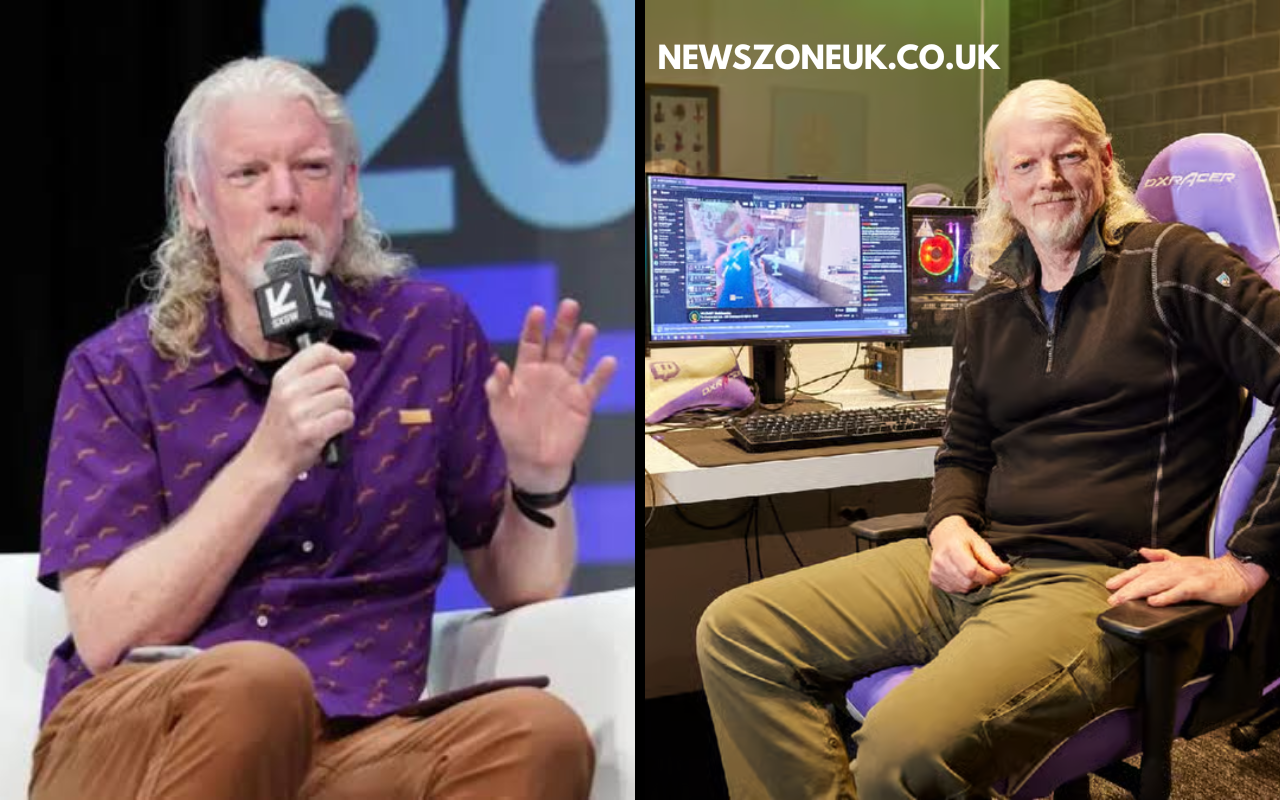
In an era where the climate crisis dominates global discourse, few architects have managed to fuse the worlds of heritage conservation and sustainable design as seamlessly as Mark Hines. While much of the architectural world fixates on gleaming new towers and futuristic materials, Hines has quietly built a reputation as a champion of a more radical idea: that the greenest building is often one that already exists. His work has positioned him at the centre of a critical debate about how we adapt our built environment for the 21st century, not through demolition and carbon-heavy new builds, but through intelligent retrofitting and a deep respect for the craftsmanship of the past. Known for his collaborative work with heritage organisations, Hines is increasingly recognised as a visionary voice in a field that is grappling with how to meet near-zero carbon targets without sacrificing architectural integrity.
At the heart of Hines’s practice is a fundamental belief that architecture must serve both its occupants and the planet. Whether he is designing strategies for a listed government building or reimagining the potential of a post-war office block, his focus remains on energy efficiency, natural ventilation, and the preservation of “embodied energy”—the carbon emitted during a building’s original construction. His projects challenge the status quo, proving that sustainability and heritage are not opposing forces but can be complementary pillars of modern design . The following facts offer a quick snapshot of the professional profile of Mark Hines.
| Attribute | Details |
|---|---|
| Full Name | Mark Hines |
| Profession | Architect, Director of Mark Hines Architects |
| Known For | Sustainable Architecture, Heritage Conservation, Low-Energy Building Retrofit |
| Nationality | British |
| Notable Collaboration | SAVE Britain’s Heritage |
| Key Focus | Carbon Reduction, Natural Ventilation, Reuse of Existing Structures |
Early Life and Educational Foundations
While specific details about Mark Hines’s early childhood remain private, the trajectory of his career suggests a formative period rooted in a deep appreciation for history and the environment. Born in England, Hines grew up in a landscape steeped in architectural history, which likely fostered his later commitment to preserving the integrity of existing structures. His decision to pursue architecture as a profession was not merely about designing new spaces but about understanding the dialogue between the built environment and the natural world. This dual passion led him to seek out formal education in architecture, where he began to develop the design philosophy that would come to define his career. He studied under mentors who valued craftsmanship and sustainability, laying the groundwork for a practice that would prioritise function, longevity, and environmental responsibility over fleeting trends . His academic background gave him the technical skills needed to create complex, data-driven proposals, a necessity when arguing for the viability of natural ventilation and carbon savings to government bodies and developers .
Building a Reputation in Sustainable Architecture
Mark Hines’s career trajectory in architecture is marked by a steadfast commitment to challenging conventional development practices. Over the years, he has established himself as a principal of his own firm, Mark Hines Architects, where he leads a team dedicated to projects that harmonise design with environmental stewardship . His work spans over two decades, during which he has become known for a portfolio that includes residential, commercial, and public projects that prioritise the seamless integration of structures into their surroundings . The turning point in his career arguably came through his high-profile involvement with the campaign to save and retrofit Richmond House, a Grade II* listed building in Whitehall. This project was not just about design; it was about politics, economics, and the future of national heritage. By proposing a low-energy alternative to demolition, Hines put his reputation on the line to advocate for a solution that would save taxpayers’ money and significantly reduce carbon emissions .
The Richmond House Campaign and Architectural Impact
The most significant highlight of Mark Hines’s career is his strategic work for Richmond House. When proposals emerged to demolish large parts of this 1980s government building to create a temporary chamber for MPs, Hines stepped in with a radical alternative. Collaborating with the heritage charity SAVE Britain’s Heritage, Hines published proposals demonstrating that the temporary House of Commons Chamber could be constructed within the main courtyard of the existing building . This was a game-changer. Not only would it preserve the architectural fabric of the building, but it would also save an estimated £500 million from the public purse .
Even more significantly, Hines collaborated with the University of Westminster on a thermal modelling study to prove how the building could be refurbished to achieve massive energy savings. The report, led by Dr. Rosa Schiano-Phan, showed that a refurbished Richmond House would produce more than 50% less carbon emissions than the demolition and rebuild plan . Hines argued passionately for the use of natural ventilation, pointing out that air-conditioned offices use more than twice the energy of naturally ventilated ones. His approach included strategies like increasing opening windows, incorporating louvers for night-time cooling, and using the existing concrete and brick finishes to help regulate temperature . The campaign gained widespread support from notable architects and heritage organisations, highlighting the importance of environmental enhancements in our national buildings .
Design Philosophy and Legacy
The work of Mark Hines is deeply rooted in principles that extend beyond aesthetics. His philosophy revolves around the belief that architecture should foster community, respect the environment, and serve as a bridge between the past and the future. This is evident in his advocacy for retrofitting over demolition, a stance that has gained increasing traction in the architecture community as the reality of the climate crisis sets in . He utilises advanced building technologies like Building Information Modelling (BIM) to ensure accuracy and efficiency in his designs, marrying traditional values with cutting-edge tools. By promoting the idea that buildings should be designed to last and be adaptable, Hines is helping to create a new legacy for architects—one where the ability to preserve and renew is seen as just as important as the ability to build anew.
Personal Life and Character
The professional persona of Mark Hines is one of a meticulous, principled, and environmentally conscious architect. His collaboration with the University of Westminster and SAVE Britain’s Heritage shows an individual who values evidence-based design and advocacy . His public statements often carry a sense of urgency and moral duty, as seen when he stated that “we are living in an era where the wasteful demolition of incredibly well constructed buildings simply shouldn’t happen” . This conviction suggests a personality that is not easily swayed by conventional wisdom but is driven by a deep-seated passion for doing what is technically and morally right.
Net Worth and Financial Outlook
For a professional of Mark Hines’s standing, finances are likely tied to the success of his architectural practice and the scale of the projects he undertakes. While his exact net worth is not publicly disclosed, his position as a director of his own firm suggests a solid financial foundation built on high-profile consultancy and design fees. He also holds directorships in other companies, including East Peckham M.O.T Service & Tyre Centre Limited, indicating a diverse portfolio of business interests . His involvement in large-scale public projects, such as the proposals for the Northern Estate, involves significant capital and demonstrates his ability to work in high-value sectors .
Social Media and Public Engagement
While Mark Hines appears to maintain a relatively low profile on mainstream social media platforms, his public engagement is most visible through his professional work and the press coverage of his campaigns. His primary platform for advocacy is the architecture and heritage press, where his proposals are showcased and debated . By leveraging the credibility of institutions like SAVE Britain’s Heritage and the University of Westminster, he has effectively communicated his message to policymakers and the public. This approach aligns with the professional, academic nature of his work, emphasising substance over self-promotion.
Recent Updates and Future Goals
As the climate crisis intensifies, the work of Mark Hines architects remains increasingly relevant. He continues to champion the retrofitting of high-quality office buildings, arguing that this is vital to meeting government carbon targets . Looking ahead, he aims to explore new materials and techniques that enhance sustainability while creating inspiring spaces. His vision for the future of architecture is one that moves beyond the status quo, addressing social issues such as affordable housing and community development alongside environmental concerns.
Conclusion
The career of Mark Hines stands as a powerful testament to the impact one architect can have on the national conversation about sustainability and heritage. By meticulously demonstrating that old buildings can be adapted for modern needs while saving money and slashing carbon emissions, he has challenged the development industry to think differently. His work, particularly his advocacy for the preservation of Richmond House, has helped shift the narrative from demolition and rebuild to intelligent, sustainable reuse. As the architecture industry searches for ways to meet the challenges of the 21st century, Mark Hines has proven that the solutions might lie not in the future, but in the careful reimagining of the past. As Mark Hines continues to pave the way for future generations, his story stands as a reminder of how resilience and purpose can shape a meaningful legacy.
Frequently Asked Questions
Q1: Who is Mark Hines?
Mark Hines is a British architect and the director of Mark Hines Architects . He is known for his expertise in sustainable design and heritage conservation, particularly his advocacy for retrofitting existing buildings instead of demolishing them .
Q2: What is Mark Hines famous for?
Mark Hines is famous for his high-profile collaboration with SAVE Britain’s Heritage to save Richmond House in Whitehall. He produced alternative proposals showing that the government building could be retrofitted to provide a temporary House of Commons chamber, saving over £500 million and significantly reducing carbon emissions compared to demolition plans .
Q3: What is Mark Hines’s approach to sustainable architecture?
His approach focuses on preserving the “embodied energy” within existing structures. He is a strong advocate for natural ventilation over air-conditioning, using strategies like opening windows, louvres, and exposed thermal mass to reduce energy demand. He believes in using data and thermal modelling to prove that retrofits can be more environmentally and economically viable than new builds .
Q4: What is Mark Hines’s nationality?
He is British .
Q5: What is the Richmond House project?
Richmond House is a Grade II* listed government building in London. Mark Hines proposed a plan to refurbish it and build a temporary MPs chamber in its courtyard instead of demolishing it. His proposal highlighted significant environmental and financial benefits, sparking a major debate about heritage and sustainable development in the UK .