Table of Contents
ToggleIntroduction
Charles Donald Fegert – Quick Facts
| Attribute | Details |
|---|---|
| Full Name | Charles Donald Fegert |
| Nickname | Chuck |
| Date of Birth | November 8, 1930 |
| Place of Birth | Chicago, Illinois, USA |
| Date of Death | September 25, 2002 |
| Age at Death | 71 years old |
| Nationality | American |
| Profession | Advertising Executive, Salesman, Marketing VP, Master of Ceremonies |
| Notable Positions | Vice President of Marketing and Advertising, Chicago Sun-Times; Executive, Chicago Daily News |
| Parents | Charles “Moon” Fegert (father), Virginia A. Henold Coppinger (mother) |
| Siblings | Craig Lewis Fegert (younger brother) |
| Spouse | Barbara Eden (m. 1977–div. 1982) |
| Children | Three (two sons, one daughter) |
| Net Worth (at death) | Estimated $5 million |
| Social Media | Not applicable (pre-digital era) |
Early Life and Roots in the Windy City
Charles Donald Fegert was born on November 8, 1930, in Chicago, Illinois, a city that would remain central to his identity for his entire life. He grew up on the South Side of Chicago in a working-class family during the Great Depression, an era that shaped his character and instilled in him a deep appreciation for hard work. His father, Charles “Moon” Fegert, worked in the steel industry, while his mother, Virginia A. Henold Coppinger, raised Charles and his younger brother, Craig Lewis Fegert. Growing up in a tough neighborhood, young Charles learned early on that success wouldn’t be handed to him—it had to be earned.
The 1930s and 1940s were transformative decades for Chicago. The city was a bustling hub of industry, media, and innovation, and Fegert absorbed the energy of his surroundings. He attended local schools and later pursued higher education in Illinois, focusing on business and communications. Some sources suggest he studied at Loyola University, graduating in 1955. His education gave him the theoretical foundation he needed, but it was his natural ability to connect with people that would truly set him apart.
Before diving into the world of advertising, Fegert briefly followed in his father’s footsteps, working in the steel mills. He also served in the Coast Guard, an experience that likely instilled discipline and a sense of duty. But Fegert had bigger dreams than the steel mill could offer. He was ambitious, charismatic, and hungry for something more—a drive that would soon lead him into the fast-paced world of media and marketing.
The Rise of an Advertising Titan
Fegert’s professional journey began humbly, as so many great careers do. He started as a salesman at the Chicago Sun-Times, one of the most influential newspapers in the United States. In those early days, he wasn’t just selling ad space—he was building relationships, learning the intricacies of client management, and developing a reputation for being sharp, persistent, and remarkably personable.
His rise through the ranks was nothing short of impressive. Fegert demonstrated a masterful understanding of client needs and the inner mechanics of media advertising. He didn’t just sell ads; he helped businesses grow by crafting strategies that connected brands with readers. His ability to blend creativity with strategy made him invaluable to the Sun-Times, and he quickly became a trusted leader within the organization.
Eventually, Fegert was promoted to Vice President of Marketing and Advertising at the Chicago Sun-Times. In this role, he oversaw large teams, shaped promotional strategies, and helped keep the newspaper profitable during a golden era of print journalism. He also worked for the Chicago Daily News, another major player in Chicago’s media landscape, further cementing his reputation as a top-tier advertising executive.
Colleagues described Fegert as a leader who led with charisma rather than fear. One friend famously called his management style “management by charisma”. He inspired his teams with confidence, charm, and a genuine passion for his work. He wasn’t the type of executive who sat behind a desk giving orders—he was in the trenches with his team, building relationships and driving results.
Beyond his newspaper work, Fegert also ventured into radio sales, working as an executive at WLS, a prominent Chicago radio station. This move demonstrated his flexibility and sharp business acumen during a time when broadcast media was undergoing significant transformation. His career was a testament to his ability to adapt, innovate, and thrive in a rapidly changing media landscape.
A Man of Many Talents: The Master of Ceremonies
What made Charles Donald Fegert truly unique wasn’t just his business acumen—it was his magnetic personality. Outside the office, Fegert was a sought-after master of ceremonies at banquets and events throughout Chicago. His humor, timing, and natural stage presence made him a crowd favorite. Some even compared him to Georgie Jessel, the legendary entertainer known for his wit and charm.
This ability to entertain and engage audiences wasn’t just a hobby—it was an extension of who Fegert was as a person. He had a gift for making people feel seen, heard, and valued. Whether he was hosting a corporate gala or simply telling stories at a family gathering, Fegert knew how to light up a room. This charisma would later play a pivotal role in his personal life, particularly when he crossed paths with one of Hollywood’s brightest stars.
A Whirlwind Romance with Barbara Eden
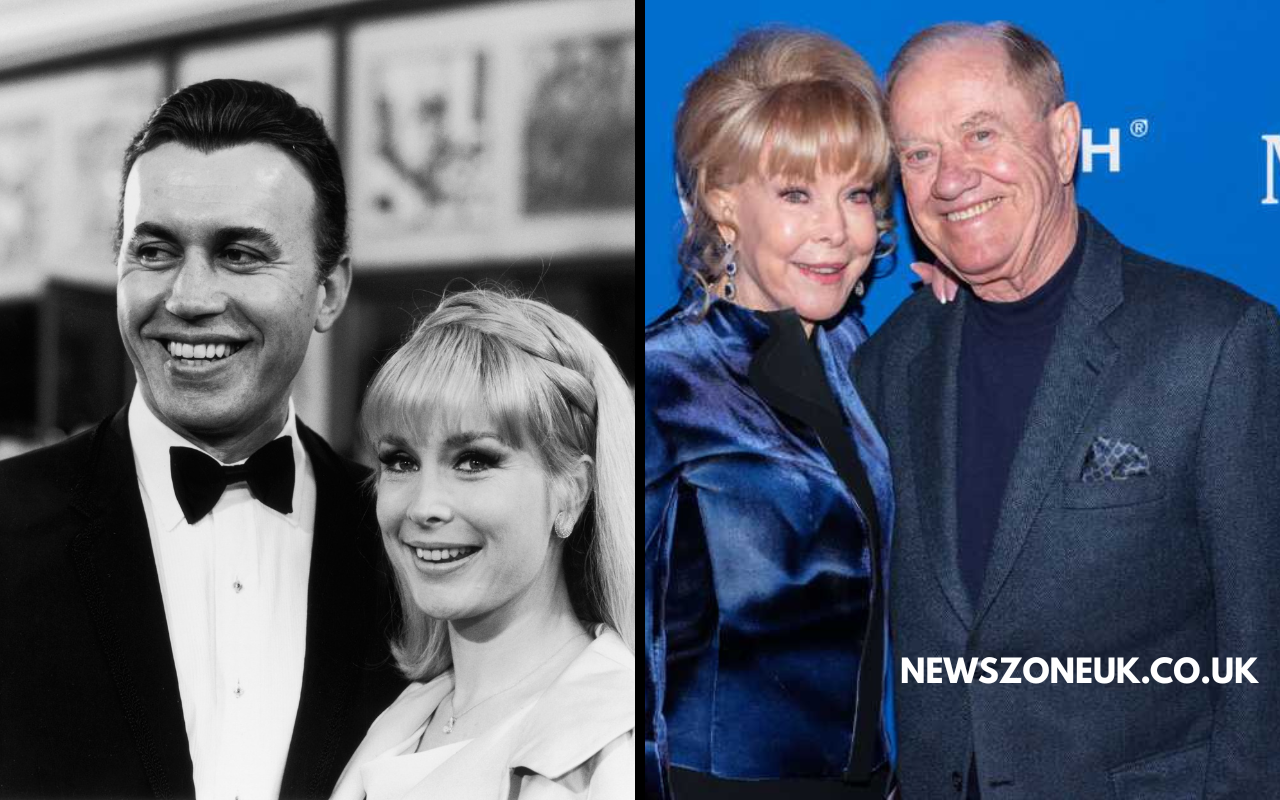
In 1974, Fegert’s life took an unexpected turn when he met Barbara Eden, the iconic actress best known for her role as Jeannie in the hit sitcom I Dream of Jeannie. Eden was in Chicago for a stage performance, and Fegert was immediately captivated by her. At the time, he told her she was his fantasy dream girl—even though he had never watched her famous TV show.
Eden, who had recently divorced her first husband, actor Michael Ansara, was initially put off by Fegert’s personality. In her 2011 memoir, Jeannie Out of the Bottle, she admitted that she found him “rude and aggressive” at first. But Fegert was persistent. He began sending her flowers every morning and evening, each delivery bearing an embossed card with the initial “C”. Slowly but surely, his charm wore her down.
The couple dated for three years before tying the knot on September 3, 1977, in Long Grove, Chicago. Eden relocated from Los Angeles to Chicago, leaving behind her Hollywood life to be with the man she had grown to love. The pair moved into a luxurious condominium overlooking Lake Michigan, complete with a mirrored Jacuzzi in the bedroom. From the outside, their life seemed like a fairy tale—a powerful advertising executive and a beloved Hollywood star, living in glamour and style.
The Unraveling of a Dream
But fairy tales don’t always have happy endings. Behind the closed doors of their lakefront condo, Fegert and Eden’s marriage was fraught with challenges. In her memoir, Eden described Fegert as a brilliant salesman but deeply insecure. She wrote that after they married, he began running with a crowd that drank heavily, and his behavior became increasingly troubling.
Eden also revealed that Fegert struggled with substance abuse, which put immense strain on their relationship. The pressures of their different worlds—his corporate life in Chicago and her Hollywood fame—only added to the tension. Despite the glamour of their public appearances, their private life was falling apart.
After five years of marriage, the couple separated in 1982 and divorced a year later. The dream had unraveled, and Fegert retreated from the public eye. Eden went on to find lasting love with real estate developer Jon Eicholtz, whom she married in 1991. But for Fegert, the end of his marriage marked the beginning of a quieter, more private chapter.
Life After Divorce: A Return to Privacy
Following his divorce from Barbara Eden, Charles Donald Fegert largely stepped out of the spotlight. He never remarried and chose to live a quiet life, focusing on what mattered most to him: his family. Fegert had three children—two sons, Michael and Chip, and a daughter named Lisa—from his previous marriages. He was a devoted father and grandfather, and those who knew him remember him as a fun-loving, affectionate presence in their lives.
His daughter Lisa later recalled that her father would sing and do impressions to make his family laugh. This was the side of Charles Donald Fegert that few outside his inner circle ever got to see—the warm, playful, deeply human side that existed far from the boardrooms and banquet halls of Chicago.
In his later years, Fegert lived peacefully in Chicago, the city that had always been his home. On September 25, 2002, he passed away in his sleep at the age of 71. His death marked the end of a life that was as complex as it was fascinating—a life defined by ambition, love, loss, and ultimately, quiet contentment.
Charles Donald Fegert’s Net Worth and Financial Legacy
At the time of his death, Charles Donald Fegert’s net worth was estimated to be around $5 million. This wealth was accumulated through his decades-long career in the advertising and media industry, where he held some of the most senior positions in Chicago’s competitive newspaper market. His role as Vice President of Marketing and Advertising at the Chicago Sun-Times and his executive work at the Chicago Daily News and WLS radio positioned him well financially.
In addition to his corporate salary, Fegert likely benefited from investments, real estate, and other business ventures. He and Eden lived in a luxurious condominium overlooking Lake Michigan, which was valued at over $250,000 at the time—a significant sum in the late 1970s. While Fegert was not a billionaire or a household name in the world of finance, he was undoubtedly a wealthy and well-off individual who enjoyed the fruits of his labor.
It’s worth noting that Fegert’s net worth has sometimes been a topic of curiosity, largely because of his association with Barbara Eden. However, his financial success was entirely his own—a testament to his skill, hard work, and strategic thinking in an industry that rewarded those who could deliver results.
The Legacy of Charles Donald Fegert
So, what is Charles Donald Fegert’s lasting legacy? For some, it will always be his marriage to Barbara Eden—a chapter that brought him into the orbit of Hollywood glamour and public fascination. But for those who knew him personally, and for those who study the history of American media, Fegert’s legacy is about so much more.
He was a pioneer in the world of print and broadcast advertising, a man who helped shape the standards and strategies of mid-century media. He rose from humble beginnings to become one of the most influential advertising executives in Chicago, a city that was itself a powerhouse of journalism and marketing innovation. His story is a reminder that success is not just about where you start, but about the determination, charisma, and resilience you bring to the journey.
Fegert also leaves behind a personal legacy—his children, grandchildren, and the memories of a man who could light up a room with his humor and warmth. Though his later years were private, they were filled with the love of family and the quiet satisfaction of a life well lived.
Lessons from His Journey
Charles Donald Fegert’s life offers several powerful lessons. First, it shows the value of perseverance. Born into a working-class family during the Great Depression, Fegert didn’t let his circumstances define him. He worked hard, pursued education, and climbed the corporate ladder through sheer determination and talent.
Second, his story highlights the importance of adaptability. Fegert didn’t just stick to one medium—he moved from print to radio, from sales to executive leadership, always evolving with the times. In a rapidly changing media landscape, his ability to pivot and innovate kept him relevant and successful.
Third, Fegert’s life reminds us that even the most glamorous relationships have their challenges. His marriage to Barbara Eden was a whirlwind romance that ultimately couldn’t withstand the pressures of fame, insecurity, and personal struggles. Yet, both he and Eden moved on with their lives, and Eden has spoken about their relationship with honesty and respect.
Finally, Fegert’s later years teach us about the value of privacy and family. After his divorce, he stepped away from the public eye and focused on what truly mattered—his children and grandchildren. In a world that often equates fame with success, Fegert’s choice to live quietly is a refreshing reminder that true fulfillment often comes from the relationships we nurture, not the headlines we generate.
Conclusion
Charles Donald Fegert was a man of many facets—a brilliant advertising executive, a charismatic master of ceremonies, a devoted father, and a husband to one of Hollywood’s most beloved actresses. His journey from the steel mills of Chicago’s South Side to the corner office of the Chicago Sun-Times is a testament to the power of ambition, hard work, and human connection. Though his name may not be as widely recognized as Barbara Eden’s, his story is no less compelling.
As Charles Donald Fegert continues to be remembered by those who knew him and by those who discover his story, his legacy stands as a reminder of how resilience, charm, and purpose can shape a meaningful life. He navigated the highs and lows of career and love with a spirit that was uniquely his own, leaving behind a story that inspires reflection on perseverance, growth, and the enduring power of family. In the end, perhaps that is the most important lesson of all: that a life well lived is not measured by fame or fortune, but by the impact we have on the people we love and the work we leave behind.
Read this too: Who Is Kelly South? The Untold Story of Resilience, Motherhood, and a Life Lived on Her Own Terms
Frequently Asked Questions (FAQs)
1. Who was Charles Donald Fegert?
Charles Donald Fegert was an American advertising executive from Chicago who served as Vice President of Marketing and Advertising at the Chicago Sun-Times and also worked at the Chicago Daily News and WLS radio. He is best known for being the second husband of actress Barbara Eden, star of I Dream of Jeannie.
2. When was Charles Donald Fegert born?
He was born on November 8, 1930, in Chicago, Illinois.
3. When did Charles Donald Fegert die?
He passed away on September 25, 2002, at the age of 71.
4. Who was Charles Donald Fegert married to?
Fegert was married to actress Barbara Eden from 1977 until their divorce in 1982. He had been married twice before meeting Eden.
5. Did Charles Donald Fegert have children?
Yes, he had three children—two sons (Michael and Chip) and a daughter (Lisa)—from his previous marriages.
6. What was Charles Donald Fegert’s net worth?
At the time of his death, his net worth was estimated to be around $5 million, accumulated through his successful career in advertising and media.
7. What was Charles Donald Fegert’s profession?
He was an advertising executive, salesman, marketing vice president, and a sought-after master of ceremonies at events in Chicago.
8. Where did Charles Donald Fegert work?
He worked at the Chicago Sun-Times as Vice President of Marketing and Advertising, at the Chicago Daily News, and at WLS radio as a sales executive.
9. Why did Charles Donald Fegert and Barbara Eden divorce?
The couple divorced after five years of marriage due to personal struggles, including Fegert’s insecurity and substance abuse issues, which put strain on their relationship.
10. What is Charles Donald Fegert’s legacy?
Beyond his marriage to Barbara Eden, Fegert is remembered as a talented advertising executive who shaped media strategies in Chicago during the mid-20th century. He is also remembered by his family as a loving father and grandfather.