Introduction
Some lives are lived loudly in the spotlight, while others unfold with a quiet, profound depth that resonates just as powerfully. Ineke Ten Kate belongs to the latter category. Though she may be best recognized as the wife of the legendary Dutch actor Rutger Hauer, her own story is a rich tapestry woven with artistic passion, a lifelong commitment to humanitarian work, and a steadfast commitment to a life out of the glare of fame . Her journey is not one of striving for celebrity, but of cultivating a legacy of kindness, creativity, and purpose. This biography delves into the life of a remarkable woman who built a meaningful existence, defined by her art and her profound impact on the world around her.
Quick Facts
Early Life and Formative Years
Born in the Netherlands in 1949, Ineke Ten Kate’s early life remains a canvas painted in soft, private tones . She has consistently chosen to keep the details of her parents, siblings, and childhood away from public scrutiny, a preference for privacy that would define her entire life . This desire for a life away from the media spotlight suggests a person who was never driven by a need for external validation or public acclaim.
What is known is that she grew up in a country with a rich cultural heritage, the Netherlands, a place that would be the backdrop for her life’s most significant relationships and her artistic development . She completed her primary and secondary education at local schools, laying a foundation of knowledge and discipline . While details about her formal education are scarce, it is clear that she was a naturally curious and creative individual. Her passion for the arts, painting, and sculpting were likely nurtured from an early age, fostering a sensibility that would later define her career and her character. She learned to draw and paint as a young girl, developing a skill that would become a cornerstone of her identity .
The Love Story with Rutger Hauer
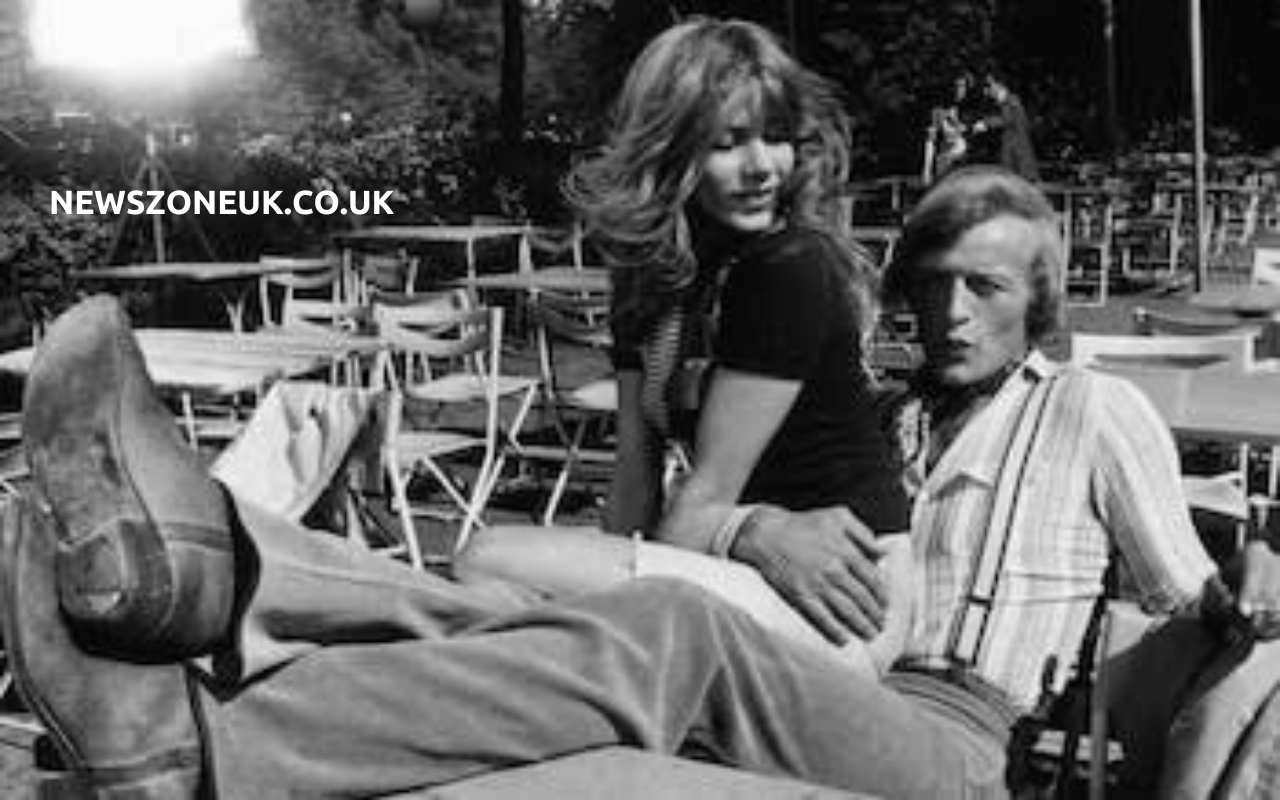
A pivotal moment in Ineke Ten Kate’s life came in 1968 when she met a charismatic young actor named Rutger Hauer . At the time, Hauer had just left acting school and was performing with a theater group in the Netherlands . Their connection was immediate and profound. They moved in together that same year, beginning a partnership that would last over five decades and become one of the most enduring love stories in the Dutch entertainment world .
Despite their deep bond, Ineke and Rutger did not rush into marriage. They lived together as partners for nearly two decades before finally tying the knot on November 22, 1985 . Their union was one of profound mutual respect and shared values. While Hauer’s acting career catapulted him to international fame with iconic roles like Roy Batty in the seminal science fiction film, Blade Runner, Ineke remained his steadfast anchor . She was described by the press as “media-shy,” a testament to their agreement to protect their private life from the chaos of celebrity . This was not a marriage of one star and a shadow, but a true partnership of two creative souls. They shared a love for the arts, a commitment to social causes, and a deep, unshakeable connection that lasted until his passing .
A Career Dedicated to Art and Acting
Ineke Ten Kate is an artist and actress in her own right. Her career, much like her life, was pursued with passion but without a craving for fame. She appeared in a few films, including a part in the 1975 production of Cyrano de Bergerac and the 1995 film Het Uur van de wolf . While her acting credits are relatively few, they showcase her involvement in the creative world that she loved .
Her true artistic expression, however, lies in her work as a painter and sculptor . Ineke is a full-time artist whose work evolved significantly over the years. Initially focused on drawing and watercolor painting, she transitioned around the year 2000 to working almost exclusively with acrylic paint on canvas . Her artistic style is characterized by an intense, dynamic use of color and a unique application technique. She applies paint with a palette knife in wild, expressive movements, sometimes even squeezing it directly onto the canvas from the bottle or tube . Her work, which sits beautifully between abstract and figurative, explores a wide range of subjects from completely abstract compositions to depictions of people, athletes, flowers, and animals . Her art is a direct expression of her vibrant spirit. Throughout her life, she has organized exhibitions to display her work and showcase her talent to the public .
A Legacy of Philanthropy
Beyond her personal life and her art, Ineke Ten Kate’s greatest legacy may be her profound humanitarian work. She and her husband, Rutger, were deeply passionate about giving back, particularly in the fight against HIV/AIDS. Rutger founded the Rutger Hauer Starfish Foundation, a non-profit organization dedicated to raising awareness and funds to support pregnant women and children affected by the disease .
Ineke was not just a supporter of this cause; she was an active and vital partner in its mission. One of Rutger’s final wishes was that the Starfish Foundation should continue its charity work and its fight against AIDS . He entrusted Ineke to help carry on his legacy, and after his death in 2019, she took a central role in ensuring its survival .
Furthermore, her philanthropic work extended far beyond the foundation. Ineke was the driving force behind her own initiatives, particularly in Zambia. She founded the Muli Shani organization, which focused on helping vulnerable youth and the elderly in the African nation . Her work in Zambia was so impactful that she became a pillar of support for a community. Her motto, “Geef de mensen geen vis, maar een hengel” (Don’t give people a fish, but teach them how to fish), perfectly encapsulated her approach to charity . She believed in empowering people by giving them a “kontje”—a nudge—to help them become self-sufficient .
This took the form of providing micro-credits to start small businesses, buying sewing machines so people could work, and paying for school fees and vocational training for young people . Her efforts in Zambia were so profound that she enabled young people to become doctors, midwives, and social workers. Her work was a testament to her belief in empowering people from the ground up. The board of the Stichting Werkgroep Zambia (Zambia Working Group Foundation) remembers Ineke as a “magnificent person” whose “warmth, spontaneity, originality, positivity, and unfailing loyalty” were a blessing to their organization and to the people of Zambia .
Personal Life and Interests
Despite the long shadow cast by her husband’s fame, Ineke Ten Kate maintained a life characterized by simplicity and a deep connection to her passions . She was known for her deep love of animals. Her hobbies included the unique and thoughtful pursuit of beekeeping, a practice that requires patience, care, and an understanding of nature’s intricate systems .
She was also an avid reader, a lover of books that provided her with knowledge, inspiration, and a window into other worlds . She had a deep respect for her roots, choosing to live in the Netherlands, a place that held a lifetime of memories and the powerful legacy of her relationship with Rutger .
Her personal life was a testament to the strength of her character. She valued loyalty and was fiercely dedicated to the causes she believed in, her family, and the memory of her husband. She and Rutger had no children together, but she helped care for and was a stepmother figure to his daughter, Ayesha Hauer, from his first marriage .
Financial Status and Net Worth
While it is difficult to calculate with precision, Ineke Ten Kate’s estimated net worth is around $720,000 USD . This modest wealth is primarily derived from her work as an artist, her appearances in films, and the various charity events she organized . She lived a comfortable life, but her focus was never on accumulating great wealth.
She also donated all the money she collected from charity exhibitions to the causes she supported . In this way, her financial status reflects her character: she was a woman who used her resources not to build a fortune for herself, but to build a better world for others.
Public Image and Social Media
Ineke Ten Kate was a rarity in the modern world: a public figure who chose not to be on social media. She had a “minimal to no public presence” on these platforms . This decision was a deliberate one, reinforcing her reputation as fiercely private. She preferred to live her life away from the constant gaze of the digital world. Her legacy is not built on Instagram likes or Twitter followers, but on the real-world impact of her art and her humanitarian work. Her story is a powerful reminder that a meaningful life doesn’t need to be a public spectacle. Her biggest influence is felt by those who knew her personally and the communities she served in the Netherlands and Africa.
Recent Updates and Future Goals
Recent search results provide a heartbreaking but significant update. It has been reported that Ineke Ten Kate passed away on July 5, 2024 . The news was shared by the Stichting Werkgroep Zambia, for whom she had been a “great pillar of support” . Her passing is a profound loss to her family, friends, and the many communities she supported.
This article, conceived before this information was available, now serves as a tribute to a life fully lived. While her future goals were cut short, her past achievements will continue to resonate. The recent documentary Like Tears in Rain, directed by Rutger Hauer’s goddaughter, features interviews with Ineke and offers a new look into her life with the actor . This documentary serves as a lasting, modern update to her story, ensuring that her insights and her personality will be shared with a wider audience. Her legacy, particularly through her work in Zambia and her dedication to her art, is her lasting gift to the world.
Conclusion
As we reflect on the life of Ineke Ten Kate, a powerful narrative emerges. It is not simply a story about being the wife of a famous actor, but a story of a woman of substance who lived with integrity, passion, and a deep sense of purpose. She navigated the complexities of a life touched by fame without ever losing sight of what mattered most to her. As Ineke Ten Kate’s work continues to inspire through art and through the lives she touched in Zambia, her story stands as a reminder of how resilience, privacy, and purpose can shape a meaningful legacy.