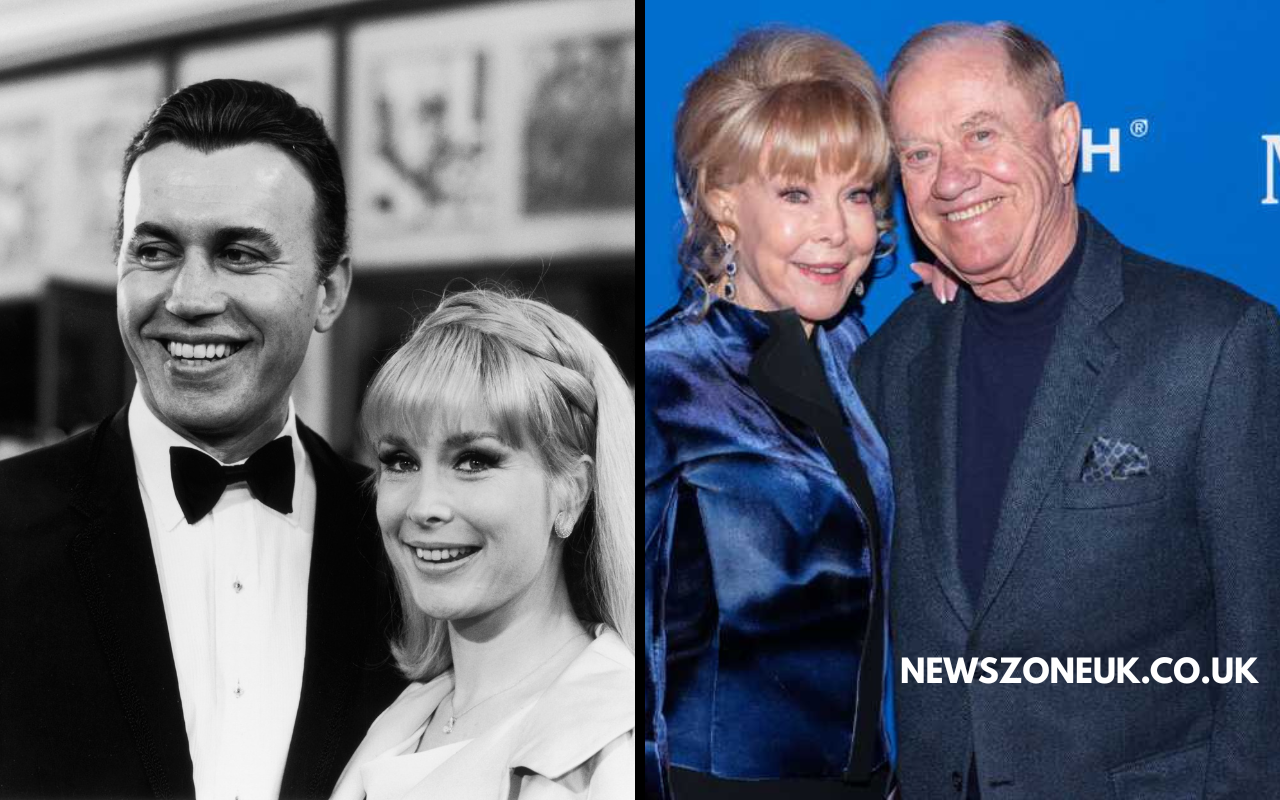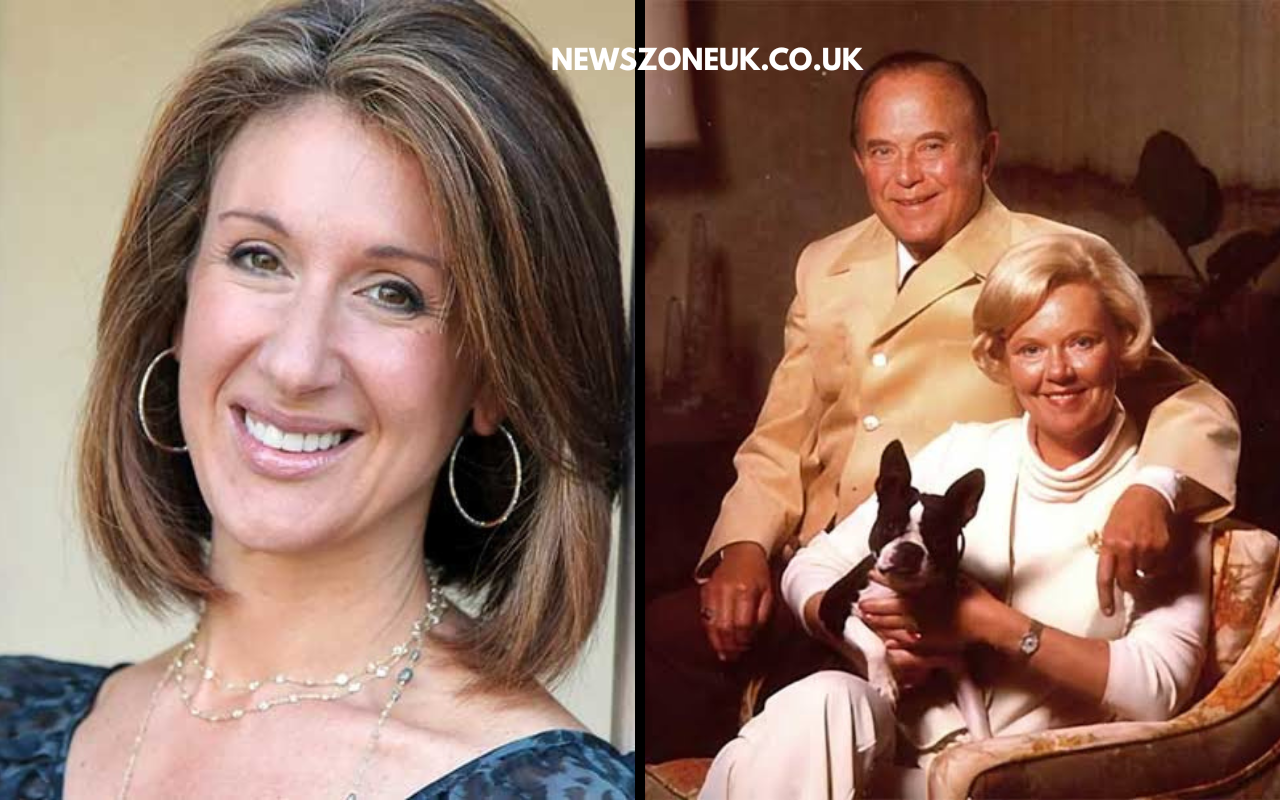
Introduction
In the sprawling saga of American entrepreneurship, few names shine as brightly as Ray Kroc, the visionary who transformed McDonald’s into a global phenomenon. Yet, behind every towering figure in history, there are often quieter, more enigmatic presences—individuals whose stories remain partially told, their lives obscured by the shadows of their more famous counterparts. Jane Dobbins Green is one such figure. While she never flipped a burger or signed a franchise deal, she walked beside the man who did during a pivotal moment in his life. Her story is not one of boardroom triumphs or public accolades, but of quiet resilience, dignified privacy, and the complex reality of being married to an American icon during his ascent to unimaginable wealth.
She emerged from relative obscurity to become the second wife of one of the most influential businessmen of the twentieth century, only to retreat back into the privacy she cherished once their union ended. For decades, curiosity has surrounded Jane Dobbins Green—who was she, what was her life like, and what became of her after she left the man who built an empire? This is the story of a woman who chose peace over publicity, a life largely lived away from the glaring lights of fame, yet forever linked to a name synonymous with fast food and fortune.
Quick Facts at a Glance
Early Life and Formative Years in the Pacific Northwest
Jane Dobbins was born on a crisp autumn day, November 22, 1911, in the charming city of Walla Walla, nestled in the southeastern corner of Washington state. It was a time of significant transition in America—the horse-drawn carriage was slowly giving way to the automobile, and the world was on the precipice of the First World War. Growing up in the Pacific Northwest, Jane’s early years were shaped by a landscape of vast wheat fields, rolling hills, and a community that valued hard work and modesty.
Details about her family background, parents, and any siblings remain frustratingly scarce. This is not due to a lack of historical record, but rather a testament to the intensely private life Jane led from the very beginning. Unlike many who seek the spotlight, she seemed to have been born with a predisposition for discretion. Her upbringing in Walla Walla, a town known for its pioneer spirit and close-knit community, likely instilled in her a strong sense of personal boundaries and a preference for a life away from public scrutiny.
She came of age during the Roaring Twenties and weathered the Great Depression, experiences that would have forged a resilient and self-reliant character. In an era before television and the internet dominated American life, Jane’s world was defined by personal relationships and local community, a stark contrast to the global stage she would later briefly inhabit. Though information about her formal education is not publicly documented, it’s reasonable to infer she possessed intelligence and grace, qualities that would later help her navigate the complex social circles of a burgeoning business tycoon. Her early life set the stage for the quiet, dignified woman she would remain, even when linked to one of the most recognized names in corporate history.
A Serendipitous Meeting in St. Paul
The course of Jane Dobbins’s life changed forever in 1957 at the Criterion Restaurant in St. Paul, Minnesota. It was here that she crossed paths with Ray Kroc, a charismatic and driven salesman who was, at that time, in the midst of building what would become a fast-food empire. By 1957, Kroc had already opened his first McDonald’s restaurant in Des Plaines, Illinois, and was aggressively expanding the franchise. But that evening in St. Paul, he wasn’t just a businessman; he was also showcasing a lesser-known side of his personality—his love for music, playing the organ in the restaurant.
Jane was captivated. The meeting was not just a fleeting encounter; it sparked a connection that would grow over the next several years. At the time, Ray Kroc was still married to his first wife, Ethel Fleming, with whom he had a daughter, Marilyn. His marriage to Ethel, however, was strained and would eventually end in divorce in 1961 after nearly forty years.
As Kroc’s business empire expanded at a breakneck pace, his personal life was undergoing a significant transformation. The bond with Jane deepened, moving from a chance meeting to a serious relationship. While Kroc was becoming a household name, Jane represented a private, grounding presence away from the high-stakes world of franchising and milkshake mixers. She was not drawn to his wealth or fame; rather, their connection seemed to be built on something more personal and profound. By the early 1960s, as Kroc’s first marriage officially ended, he and Jane were ready to begin a new chapter together.
The Marriage to Ray Kroc: A Brief Union in the Spotlight
On February 23, 1963, Jane Dobbins Green and Ray Kroc exchanged vows, and she became the second Mrs. Ray Kroc. The wedding marked the beginning of a new phase not just for the couple, but also for Kroc, who was on the cusp of buying out the McDonald brothers and taking full control of the company he would make legendary. At 52 years old, Ray Kroc was a man in a hurry, driven by ambition and a relentless work ethic. Jane, at 51, entered this marriage with a quiet strength and a clear-eyed understanding of the man she was marrying.
Life as the wife of Ray Kroc was far from ordinary. Kroc was known for his intense, sometimes abrasive personality, his boundless energy, and his singular focus on business. Jane, however, maintained a distinct identity. While other spouses of powerful men might have embraced the public role, Jane chose a different path. She remained elusive, deliberately stepping back from the media attention that surrounded her husband. She was not interested in the limelight, preferring to support Kroc from the quiet background of their private life.
Their marriage, however, was not destined to last. After just five years, in 1968, the couple divorced. The reasons for their split were never publicly disclosed, a detail that has fueled speculation for decades. The pressures of Kroc’s relentless business pursuits, his growing fame, and his often demanding personality may have played a role. It’s also worth noting that Kroc had met his third wife, Joan, at the Criterion Restaurant in 1957—the very same place he met Jane—and he never fully got over his attraction to her. Joan would eventually become his third wife in 1969, just a year after his divorce from Jane. Jane and Ray had no children together, and after the divorce, they went their separate ways.
Life After the Divorce: A Return to Privacy
Following the dissolution of her marriage, Jane Dobbins Green did exactly what her nature dictated: she retreated entirely from the public eye. Unlike many ex-spouses of celebrities who might write memoirs or give interviews, Jane chose silence. She had no interest in cashing in on her brief moment of fame or airing the details of her private life. She simply disappeared from the headlines, living the rest of her life with the dignity and privacy she had always valued.
It is believed that she moved to California, where she lived quietly. She eventually remarried, taking the last name Whitney, though details about this later chapter of her life remain incredibly sparse. Her ability to completely vanish from the public consciousness is a remarkable feat in itself, particularly given the enduring fame of her ex-husband and the McDonald’s brand. She was a master of discretion, a woman who understood that true peace came not from public recognition, but from a life lived on one’s own terms, away from the prying eyes of the world.
Final Years and Quiet Passing
Jane Dobbins Green lived a long life, passing away on August 7, 2000, in Los Angeles, California, at the age of 88. The cause of her death was attributed to old age. By the time she passed, she had been divorced from Ray Kroc for over thirty years. Kroc himself had died in 1984, having left the vast majority of his fortune to his third wife, Joan, and various charitable foundations.
Jane’s passing did not make major headlines. It was a quiet end to a life that had, for the most part, been lived in the shadows of one of America’s most famous business stories. The fact that her death went largely unnoticed is perhaps the final testament to her lifelong commitment to privacy. She left behind no tell-all books, no dramatic interviews, and no public legacy of her own. Instead, she left a story of quiet resilience, a woman who married a titan of industry and then had the strength to walk away and build a peaceful life for herself.
Net Worth and Financial Standing
Unlike her ex-husband, whose fortune was vast and well-documented, Jane Dobbins Green’s personal net worth has never been publicly disclosed. Ray Kroc, at the time of his death in 1984, was estimated to be worth over $600 million, a figure that would be equivalent to approximately $1.4 billion today. However, it is unclear what, if any, financial settlement Jane received as part of their 1968 divorce. Given the short duration of their marriage and the fact that she did not have children with Kroc, it is unlikely she received a significant portion of his burgeoning empire.
What is clear is that Jane lived comfortably and independently after her divorce. She was able to maintain a private life, likely supported by the terms of their divorce settlement, though the specifics remain a closely guarded secret. Her financial story is a reminder that wealth and fame are not always intertwined, and that a person can lead a fulfilling life without the trappings of immense fortune. Her true wealth lay in her autonomy, her privacy, and her ability to live life on her own terms.
Social Media and Public Persona
Jane Dobbins Green lived in a world before the internet, social media, and the 24-hour news cycle. She had no Instagram, Twitter, or LinkedIn accounts. In fact, she would have likely been horrified by the very concept of sharing her personal life with millions of strangers online. Her complete absence from the digital world is a defining characteristic of her legacy. She represents an era when privacy was a cherished and attainable ideal, a stark contrast to today’s culture of constant sharing and personal branding.
For those curious about her today, her story exists only in the pages of history books, a few online articles, and the fading memories of those who knew her. She did not seek to build a personal brand or cultivate a following. Instead, she built a wall of privacy that has remained remarkably intact, even decades after her death. Her life serves as a fascinating counterpoint to the modern obsession with celebrity and the relentless pursuit of public attention.
Legacy and Lasting Impact
So, what is the legacy of Jane Dobbins Green? She is not remembered for a great invention, a powerful speech, or a business empire. Her legacy is more subtle. She is a symbol of quiet dignity and personal choice in the face of overwhelming public interest. In a world that often judges a person’s worth by their visibility, Jane chose the opposite path. She chose to be invisible.
Her story is a reminder that not everyone who touches greatness seeks to be great themselves. She was a supporting character in the epic drama of Ray Kroc’s life, but she was also the author of her own story—a story that she deliberately chose to keep private. For those who study the lives of historical figures, Jane Dobbins Green offers a valuable lesson: that the most important chapters of a person’s life are often the ones they choose not to share with the world. She remains an enigma, a woman who stepped onto the public stage briefly, only to exit gracefully and completely, leaving behind more questions than answers.
Read this to: Bryan Spies: The Quiet Hero Behind the Badge
Frequently Asked Questions (FAQs)
Q1: Who is Jane Dobbins Green?
Jane Dobbins Green is best known as the second wife of Ray Kroc, the legendary businessman who transformed McDonald’s into a global fast-food empire.
Q2: When was Jane Dobbins Green born?
She was born on November 22, 1911, in Walla Walla, Washington, USA.
Q3: How did Jane Dobbins Green meet Ray Kroc?
She met Ray Kroc in 1957 at the Criterion Restaurant in St. Paul, Minnesota, where he was playing the organ.
Q4: How long were Jane Dobbins Green and Ray Kroc married?
They were married for five years, from 1963 until their divorce in 1968.
Q5: Did Jane Dobbins Green have any children?
No, Jane and Ray Kroc did not have any children together.
Q6: Is Jane Dobbins Green still alive?
No, she passed away on August 7, 2000, in Los Angeles, California, at the age of 88.
Q7: What was Jane Dobbins Green’s net worth?
Her personal net worth was never publicly disclosed.
Q8: What happened to Jane Dobbins Green after her divorce from Ray Kroc?
After the divorce, she retreated entirely from the public eye, lived a private life, and eventually remarried, taking the last name Whitney.