Introduction
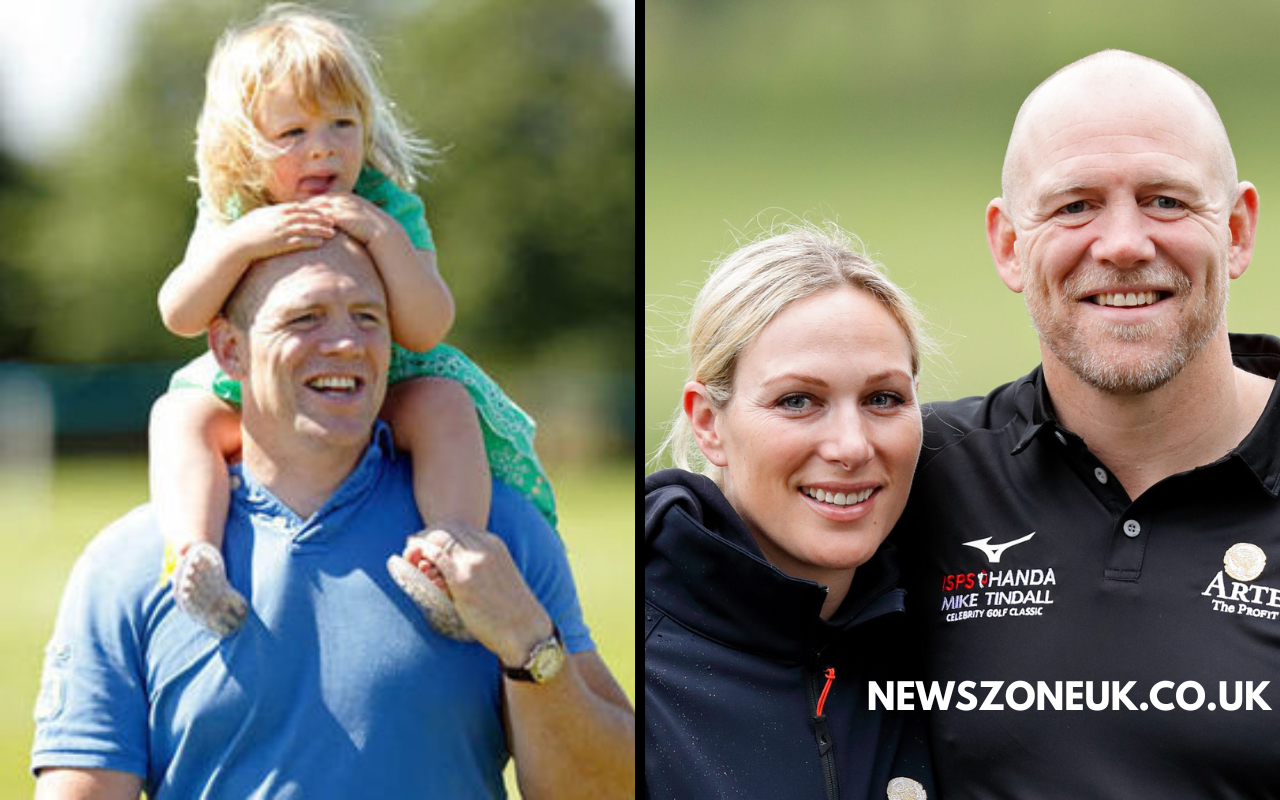
Most people know the name Tindall from the rugby pitch—from Mike Tindall’s World Cup heroics or his marriage into the British royal family. But behind every champion stands a foundation, and for Mike Tindall, that foundation has always been his father, Philip Tindall. A former Barclays banker, a rugby man through and through, and a father who has faced life’s toughest challenges with quiet dignity, Philip’s story is one of resilience, family devotion, and the unspoken sacrifices that shape sporting greatness.
Yet for all the public attention surrounding his son’s glittering career and royal connections, Philip has remained deliberately out of the spotlight—a private man navigating a very public journey. His life took an unexpected turn in 2003, the very year his son lifted the Rugby World Cup, when the first symptoms of Parkinson’s disease began to show. What followed has been a decades-long battle that has tested the Tindall family’s strength in ways no trophy ever could. This is the story of the man behind the name—a devoted husband, a proud father, and a symbol of quiet perseverance.
Quick Facts
| Category | Details |
|---|---|
| Full Name | Philip Tindall (also known as Phil Tindall) |
| Date of Birth | Circa 1950s (exact date not publicly disclosed) |
| Age | Estimated early-to-mid 70s |
| Birthplace | Yorkshire, England |
| Nationality | British |
| Profession | Former Banker (Barclays Bank); Former Rugby Player (Otley RUFC) |
| Known For | Father of England rugby star Mike Tindall; Parkinson’s disease advocacy |
| Parents | Not publicly disclosed |
| Siblings | Not publicly disclosed |
| Spouse | Linda Tindall (née Shepherd), former social worker |
| Children | Ian Tindall (born 1975), Mike Tindall (born 1978) |
| Net Worth | Not publicly disclosed; estimated modest family wealth from banking career |
| Social Media | Philip Tindall maintains no public social media presence |
| Notable Associations | Otley Rugby Union Football Club (captain); Barclays Bank |
Early Life and Formative Years
Philip Tindall was born and raised in Yorkshire, England—a region renowned for its rugged landscape, industrial heritage, and fiercely proud people. Growing up in the heart of the north, Philip was shaped by the values that define the Yorkshire character: hard work, resilience, loyalty, and a no-nonsense approach to life. These were not just abstract ideals but principles that would guide him through every chapter of his life, from the rugby pitch to the banking floor and, eventually, through the most challenging health battle a person can face.
Yorkshire in the mid-twentieth century was a place where community mattered. Neighbours looked out for one another, and sporting clubs were the heartbeat of local life. It was in this environment that Philip developed his love for rugby union—a sport that would become a defining thread throughout his life. Rugby, particularly in the north of England, was more than just a game; it was a brotherhood, a test of character, and a source of identity. For young Philip, it was where he learned about teamwork, discipline, and the kind of physical and mental toughness that would serve him well in the decades to come.
Little is publicly known about Philip’s parents or siblings, as he has always been a fiercely private individual who preferred to let his actions speak louder than words. But what is clear is that his upbringing instilled in him a deep sense of responsibility—not just to himself, but to his family and his community. These were the values he would later pass on to his own sons, Ian and Mike, shaping them into the men they would become.
Education and the Path to Banking
While details of Philip’s formal education remain private, his career trajectory suggests a man who valued stability, professionalism, and financial acumen. He eventually joined Barclays Bank, one of the United Kingdom’s most prestigious and enduring financial institutions. Banking in the latter half of the twentieth century was a career that demanded precision, trustworthiness, and an unwavering commitment to service—qualities that Philip possessed in abundance.
At Barclays, Philip carved out a respectable career. Banking was not merely a job for him; it was a profession that allowed him to provide for his growing family and build a secure future. The financial sector in those days was built on relationships and reputation, and Philip earned both through years of dedicated service. His colleagues would have known him as a man of integrity—someone who could be relied upon, whether balancing a ledger or offering a steady hand during times of economic uncertainty.
Yet Philip was never defined solely by his work at the bank. His identity was always multifaceted—a banker by day, but a rugby man, a father, and a husband at all other times. This balance between professional duty and personal passion is a hallmark of his character, and it’s a lesson he unknowingly imparted to his sons: that a man can be many things, and that each role deserves the same level of commitment and care.
A Rugby Legacy
Rugby union was not just a hobby for Philip Tindall—it was a way of life. He played for Otley Rugby Union Football Club, a storied club in West Yorkshire with a proud tradition. But Philip didn’t just play; he captained the team. Leadership on the rugby pitch requires more than athletic ability; it demands strategic thinking, the respect of one’s peers, and the ability to inspire others to give their best. These are qualities that Philip clearly possessed in spades.
His rugby career was not merely a footnote; it was a significant chapter that would influence the next generation in profound ways. Philip passed his love for the game down to his sons, particularly Mike, who would go on to achieve the highest honours the sport can offer. Mike has often spoken about the close bond he shares with his father—a bond forged in part through their shared passion for rugby. The hours spent kicking a ball around the garden, the lessons in discipline and sportsmanship, and the unwavering support from the sidelines all contributed to shaping the World Cup-winning player Mike would become.
Rugby runs deep in the Tindall family. In addition to Philip’s own playing career, Mike’s four uncles also played the sport. It was, in many ways, the family business—a tradition of physical courage, teamwork, and camaraderie that bound the generations together.
Building a Family: Marriage to Linda and Fatherhood
Philip’s personal life found its anchor when he married Linda Shepherd, a social worker by profession. Linda was described by their son Mike as “a very stoic, northern lady” who has dedicated herself to caring for Philip throughout his illness. Together, they built a life founded on mutual respect, shared values, and an unshakeable commitment to one another.
The couple had two sons: Ian, born in 1975, and Mike, born on October 18, 1978, in Otley, West Yorkshire. The family lived in Otley, a market town that provided a grounded, community-oriented upbringing for the boys. Mike attended Queen Elizabeth Grammar School in Wakefield, an independent school that required significant fees—a testament to Philip and Linda’s determination to provide the best opportunities for their children.
Fatherhood was a role that Philip embraced with the same seriousness and dedication he brought to his career and his rugby. He was present, engaged, and supportive—a constant source of encouragement. Mike has described his father as “an absolutely unbelievable father”. Those words carry weight, coming from a man who has achieved so much on the world stage. They speak to a childhood filled with love, guidance, and the kind of quiet, steady presence that builds character without demanding the spotlight.
The Turning Point: 2003 and the Parkinson’s Diagnosis
The year 2003 was one of triumph for the Tindall family. Mike was in Australia with the England rugby squad, competing in the Rugby World Cup. It was the tournament that would see England lift the trophy for the first time in their history, with Mike playing a crucial role in the victory. It should have been a year of unalloyed celebration.
But even as Mike was making history on the pitch, Philip was experiencing something far less joyous. It was during this same period that Philip began noticing twinges in one of his hands—subtle, at first, easy to dismiss as the aches and pains of age or the lingering effects of a hard-lived life. But the symptoms didn’t go away. They persisted, and gradually, the reality became impossible to ignore.
Philip was diagnosed with Parkinson’s disease in 2003, the same year his son won the Rugby World Cup. It was a cruel twist of fate—a moment of soaring achievement for one member of the family shadowed by a life-altering diagnosis for another. For Philip, the diagnosis marked the beginning of a long and difficult journey, one that would test his resilience and the strength of his family in ways they could never have anticipated.
Living with Parkinson’s: A Quiet Battle
Parkinson’s disease is a progressive neurological condition that affects movement, causing tremors, stiffness, and slowness. Over time, it can impact speech, writing, posture, and even cognitive function. It is a condition that robs a person of the physical abilities they once took for granted—a particularly cruel fate for a man like Philip, who had spent his life being physically active on the rugby pitch.
In the years following his diagnosis, Philip’s condition gradually worsened. His spine began to curve, causing problems with his discs. By 2011, the year Mike married Zara Phillips, Philip required a wheelchair for parts of the wedding. It was a poignant moment—a father watching his son begin a new chapter of his life, while simultaneously confronting the reality of his own declining health.
Philip has spoken candidly about his condition, admitting that he initially tried to ignore it. “I tried to ignore it, I think,” he said in a rare interview. “I’ve got an incurable condition, and it’s gradually going to get worse, and worse, and worse”. He reflected on the physical changes that the disease had wrought, noting that he had always been a man who caught the ball, not one who dropped it. “And this was now not happening”.
His wife Linda has been his primary caregiver throughout this ordeal—a role she has embraced with quiet devotion. During the COVID-19 pandemic, the couple were considered vulnerable and remained shielded at home for over a year. Mike has spoken about how much his mother has missed the companionship of others, but she has never wavered in her commitment to Philip.
The Impact on the Tindall Family
Philip’s battle with Parkinson’s has had a profound impact on the entire Tindall family. Mike has been remarkably open about the emotional toll, expressing regret that he didn’t fully understand the progression of the disease in its early stages. “I didn’t really understand the process of how it deteriorated and how it could end up at that point, and that’s the sort of one of the things I regret,” he admitted. He also acknowledged that, like many people of his father’s generation, Philip was reluctant to acknowledge pain or seek help—a trait that Mike now wishes he had challenged more firmly.
In recent years, Mike has channelled his father’s struggle into advocacy. He became a patron of Cure Parkinson’s in 2018, a charity dedicated to funding research to find a cure for the condition. Through his platform, Mike has raised awareness and funds, using his father’s story to shine a light on a disease that affects millions worldwide.
Philip’s condition has continued to progress. Mike has described his father as now being “a shell of what he once was”. It is a heartbreaking description—a reminder of just how brutal this disease can be. Yet even in the face of such profound loss, the Tindall family has remained united. Philip’s wish, as he expressed it, is to “feel like [he’s] contributing to something”—not to be viewed as “a lump in the corner, shaking in a chair”. He also expressed a simple, poignant desire: to kick a ball around with his grandchildren. It’s a wish that speaks volumes about the man he has always been—a father, a grandfather, and a lover of the game.
Net Worth and Income Sources
Philip Tindall’s net worth has never been publicly disclosed, and it is unlikely that he ever sought wealth or fame for their own sake. His career at Barclays Bank provided a stable income that allowed him to support his family and provide for his children’s education. His rugby career, while not at the professional level of his son’s, would have supplemented his income, particularly during his time as club captain.
In terms of wealth, Philip is not a public figure in the sense of accumulating vast riches. His legacy is measured not in pounds and pence but in the strength of his family, the character of his sons, and the quiet dignity with which he has faced life’s challenges. His wife Linda has been his constant companion and caregiver, and together they have navigated the financial and emotional demands of a long-term illness with grace and resilience.
Social Media Presence and Public Interaction
Philip Tindall does not maintain a public presence on social media platforms. He has never sought the spotlight, and his privacy has been carefully guarded by his family. However, his story has been shared through the words of his son Mike, who has used his platform to raise awareness about Parkinson’s disease and to honour his father’s strength.
Mike’s social media posts and interviews have offered glimpses into Philip’s life and character, painting a picture of a man who is deeply loved and respected by his family. Through these channels, Philip’s story has reached millions, inspiring others who are facing similar battles with Parkinson’s or supporting loved ones through the disease.
Recent Updates and Current Status
In recent years, Philip’s health has continued to decline. Mike has provided updates that are both honest and heartbreaking, describing his father’s struggle as “brutal” and noting that there is “no let-up” from the disease. The family has rallied around Philip, with Linda remaining his primary caregiver and Mike continuing to advocate for Parkinson’s research.
As of the most recent updates in 2025 and 2026, Philip’s condition remains serious. Mike has spoken about the toll it has taken, not just on his father, but on the entire family. Yet even in the face of such adversity, the Tindall family’s bond remains unbroken. Philip’s legacy—of resilience, devotion, and quiet strength—continues to inspire those who know his story.
Future Goals and Ongoing Projects
Philip himself is no longer in a position to pursue new projects or goals. His focus, and that of his family, is on his comfort and quality of life. However, his story lives on through the work of Cure Parkinson’s and through Mike’s ongoing advocacy.
Mike has expressed a desire to ensure that his father’s experience is not in vain—that it can help others understand the importance of early intervention and the need for greater research funding. The Tindall family’s openness about Philip’s condition has helped to reduce the stigma surrounding Parkinson’s and has encouraged others to speak out about their own experiences.
Conclusion: A Legacy of Quiet Strength
Philip Tindall may never have sought the limelight, but his story is one of the most compelling in modern British life—a tale of a man who built a career in banking, captained a rugby club, raised a World Cup-winning son, and faced a devastating illness with unshakeable dignity. His life is a testament to the power of family, the importance of resilience, and the quiet heroism that exists in everyday life.
In a world that often celebrates flashy success and public acclaim, Philip’s story reminds us of something deeper: that true character is revealed not in moments of triumph, but in how we face our darkest challenges. He has been a father, a husband, a sportsman, and a fighter. And through it all, he has remained, in the words of his son, “an absolutely unbelievable father.”
As Philip Tindall continues his battle with Parkinson’s disease, his family stands with him—united, devoted, and determined to honour his legacy. His story is a powerful reminder that resilience, love, and purpose can transform even the most difficult circumstances into something meaningful. It is a legacy that will endure long after the rugby trophies have been put away—a legacy of quiet strength, unwavering love, and the unbreakable bonds of family.
Read this too: Russ Armstrong: The Comedy Writer, Producer, and Actor Behind the Scenes
Frequently Asked Questions (FAQs)
1. Who is Philip Tindall?
Philip Tindall is a former Barclays Bank employee and former rugby player who is best known as the father of England rugby star Mike Tindall. He has lived with Parkinson’s disease since 2003 and has been the subject of his son’s advocacy for Parkinson’s research and awareness.
2. What is Philip Tindall’s connection to rugby?
Philip was a rugby player himself, captaining Otley Rugby Union Football Club for several years. He passed his love for the sport on to his son Mike, who went on to win the Rugby World Cup with England in 2003.
3. When was Philip Tindall diagnosed with Parkinson’s disease?
Philip was diagnosed with Parkinson’s disease in 2003—the same year his son Mike won the Rugby World Cup in Australia. He began experiencing symptoms, including twinges in his hands, earlier that year.
4. Who is Philip Tindall’s wife?
Philip is married to Linda Tindall (née Shepherd), a former social worker. Linda has been Philip’s primary caregiver throughout his illness and has been described by their son Mike as “a very stoic, northern lady.”
5. How many children does Philip Tindall have?
Philip and Linda have two sons: Ian Tindall, born in 1975, and Mike Tindall, born in 1978.
6. Where was Philip Tindall born?
Philip was born and raised in Yorkshire, England. He lived in Otley, West Yorkshire, where he raised his family.
7. What is Philip Tindall’s net worth?
Philip Tindall’s net worth has not been publicly disclosed. He enjoyed a stable career as a banker at Barclays and supplemented his income through his rugby involvement, but his wealth has never been a matter of public record.
8. Does Philip Tindall have social media?
No, Philip Tindall does not maintain any public social media accounts. He has always been a private individual who avoided the spotlight.
9. What charities is Philip Tindall associated with?
Philip’s son Mike has been a patron of Cure Parkinson’s since 2018, raising funds and awareness for the charity in honour of his father’s battle with the disease.
10. How is Philip Tindall’s health now?
Philip’s health has declined over the years due to the progressive nature of Parkinson’s disease. His family, particularly his wife Linda and son Mike, have been open about the challenges he faces, describing the condition as “brutal” and noting that it has taken a significant toll on his physical abilities.
11. Why is Philip Tindall in the news?
Philip has been in the news primarily through his son Mike’s advocacy for Parkinson’s awareness. Mike has spoken publicly about his father’s condition, his regrets about not understanding the disease earlier, and the importance of early intervention and research funding.
12. What is Philip Tindall’s legacy?
Philip’s legacy is one of quiet strength, resilience, and family devotion. He is remembered as a loving father, a dedicated husband, and a man who faced a devastating illness with dignity. His story has inspired others and helped raise awareness about Parkinson’s disease.